Corporate governance is more than compliance
Practical insight into how boards evaluate performance, strengthen effectiveness, and translate governance into real outcomes.
This page brings together key perspectives on board evaluation, board effectiveness, and modern governance practice.
It explains what board evaluations should achieve, where they often fall short, and how structured approaches can deliver clearer insight and stronger decision-making.

Why governance matters
Corporate governance defines how organisations are directed, controlled, and held accountable.
Strong governance supports better decisions, clearer oversight, and long-term organisational resilience.
Board evaluation plays a central role by helping boards understand how effectively they operate in practice — not only whether formal requirements are met.
Brief history of Board Evaluations
Board evaluations have gradually become an expected governance practice across many jurisdictions and sectors.
They are now widely adopted in:
Listed companies
Financial institutions
Public organisations
Large private companies
This reflects a broader shift toward measurable board effectiveness, not only formal compliance.
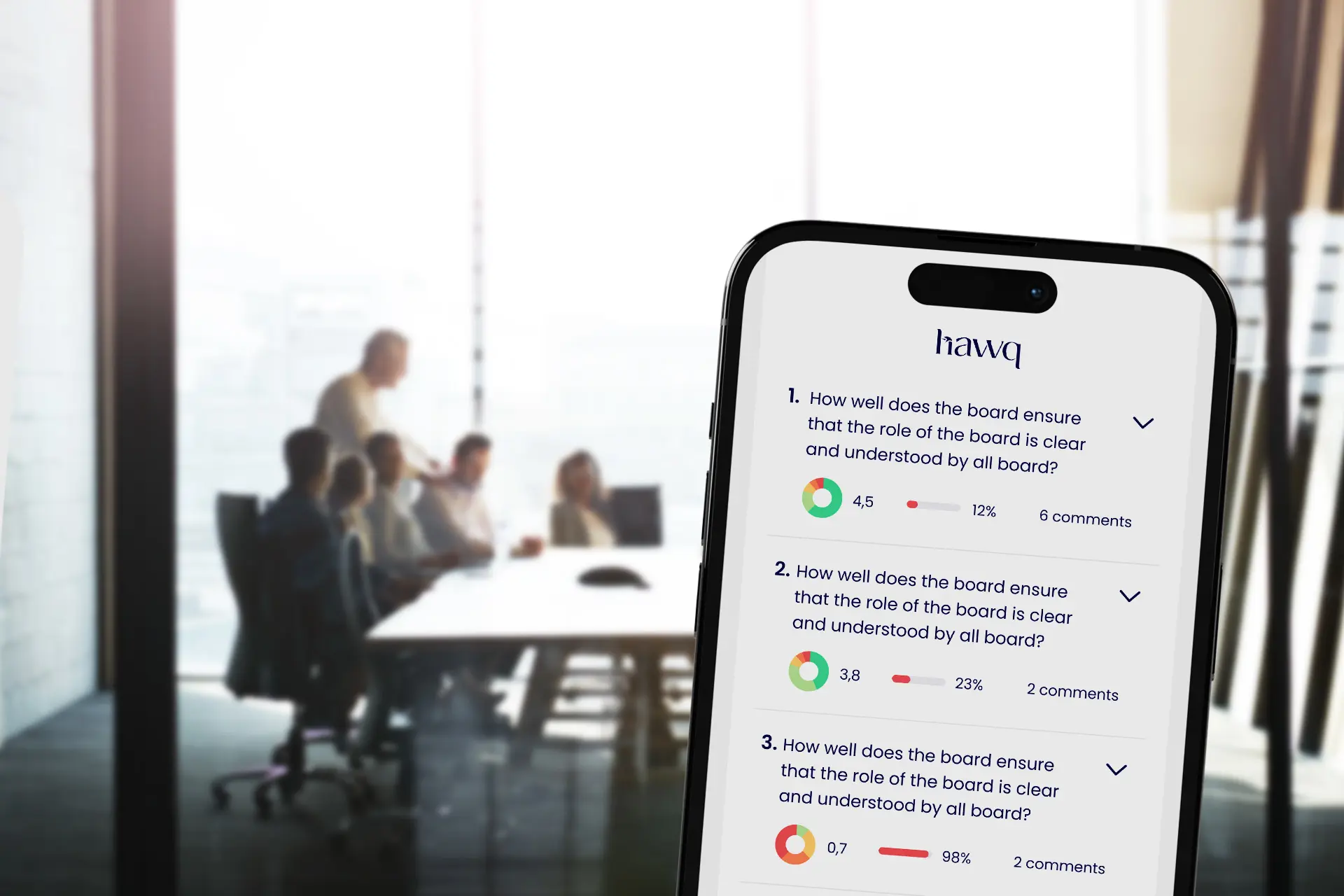
What effective evaluations actually enable
Board evaluations do not automatically solve governance challenges.
However, when designed and used effectively, they can:
Reveal strengths and weaknesses in board performance
Improve decision-making and collaboration
Clarify roles, expectations, and accountability
Support continuous board development
Their value depends on structure, honesty of input, and meaningful follow-up.
A practical approach to effective board evaluation
Effective board evaluation requires more than questionnaires or compliance exercises.
It requires clear structure, relevant questions, and outputs that boards can act on.
The HAWQ approach is informed by:
Extensive board evaluation experience
Interviews with board members and governance leaders
Practical governance work across sectors
This foundation enables organisations to run credible, structured evaluations that deliver real insight — while remaining practical and cost-effective to administer.
See how structured board evaluation works in practice
Explore how HAWQ supports clearer insight, actionable priorities, and measurable governance improvement.